
1. After allocating cards, the limit is another easy-to-overlook variable
Our One Virtual Card for All AI Subscriptions, or One Each? guide covers how to split subscriptions across cards, but whichever way you split them, opening a card still means picking a number — the monthly limit. That number directly decides whether renewals fail for no obvious reason, and how much you stand to lose if something goes wrong.
2. The problem with setting it too low: a price hike breaks renewal
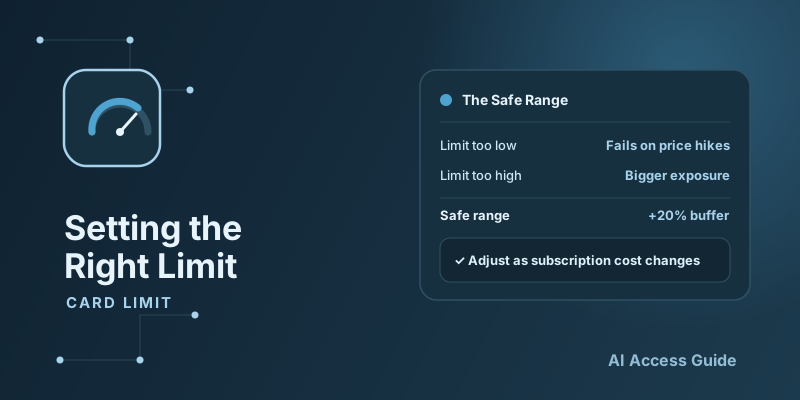
If the limit is set to exactly match the current subscription price with no buffer, any price increase, added tax, or one-off surcharge that pushes the charge above the cap causes that renewal to fail outright. The frustrating part is these failures rarely come with advance warning — you usually only notice once the subscription has already lapsed.
3. An easy-to-miss case: multi-currency charges and exchange rate swings
Our Real Cost of Paying From Abroad guide covers how cross-border charges often end up slightly higher than the listed price due to exchange rate movement and conversion fees. If a limit is set strictly against the displayed price, a few percentage points of currency swing can be enough to push the charge over the cap — a scenario that's easy to overlook when first setting a limit.
4. The risk of setting it too high: a bigger exposure if something goes wrong
Setting the limit far above what's actually needed feels safer, but it just shifts the risk elsewhere: if the card number is ever compromised, or a merchant double-charges by mistake, the ceiling on what can be taken is also higher — potentially far more than a single normal renewal.
5. Estimating a reasonable limit: subscription cost plus roughly 20% buffer
A practical rule: base the limit on the actual charge amount (including tax), then add roughly a 20% buffer to absorb exchange rate movement and occasional price adjustments, rather than setting it strictly to the displayed price. The exact percentage doesn't need to be precise — the point is leaving enough margin for error without letting the limit run wild.
6. A limit isn't set-and-forget — update it when your subscriptions change
After upgrading a plan, adding team seats, or an annual price increase, a previously reasonable limit can quickly fall short. Make "check whether the card limit still matches current subscriptions" part of your routine pre-renewal check, and update the relevant card's limit right away whenever a plan changes.
7. When one card covers multiple subscriptions, size the limit to the total
If you're following the grouping approach from our One Virtual Card for All AI Subscriptions, or One Each? guide and sharing a card across several subscriptions, don't size the limit for just one of them — base it on the combined total of every subscription on that card plus a buffer, so multiple renewals landing in the same month don't crowd each other out.
8. In practice: use a provider that makes limits easy to adjust
Whether a limit is easy to adjust depends on the provider. Using the virtual card provider RDVCC as an example, each card's monthly limit can be set and changed independently from the dashboard — when a plan changes or exchange rates move noticeably, you just update that card's limit directly, with no need to close and reopen it.
9. Summary
A virtual card limit isn't safer the lower it is, nor more secure the higher it is — the goal is a reasonable buffer over the actual charge amount. Too low invites declines from price hikes and currency swings; too high just widens the exposure if something goes wrong. Once it's set, treat it as something to revisit whenever a subscription or team size changes, not a one-time task.