
1. Virtual cards aren't just about providers — they come in two types
Our Choosing a Virtual Card Provider guide covers what to check before picking an issuer, but many people only discover after opening a card that the same provider usually offers both "single-use" and "recurring" card products, meant for very different purposes. Picking the wrong type trips people up at renewal more often than picking the wrong provider does.
2. What a single-use virtual card is: one authorization, then it's dead
A single-use virtual card typically allows exactly one charge (or a very short validity window) before the card number automatically expires and can't be charged again. This design originated as protection against a merchant's stored card number being reused fraudulently — it's inherently "burn after use."
3. The case for single-use: trials and short-term subscriptions, low exposure
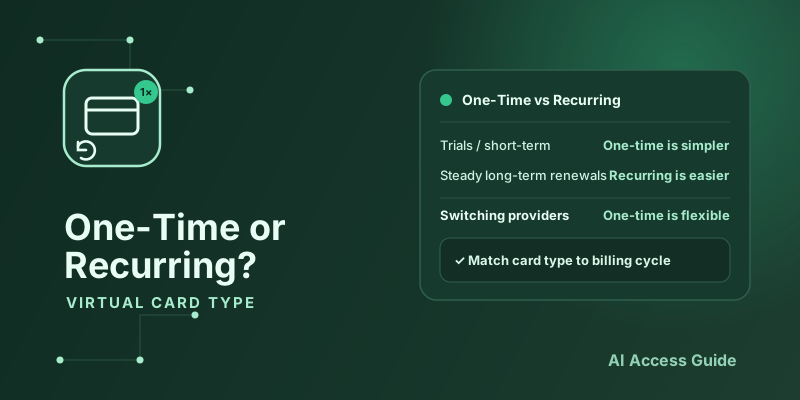
If you just want to try a monthly plan for an AI tool, or grab a one-time promotional deal, a single-use card is the safer choice: even if the merchant's systems are later breached, the leaked card number has already expired and can't be charged for anything else.
4. The limit of single-use: it can't survive auto-renewal
Here's the catch: subscription services like ChatGPT and Claude mostly rely on auto-renewal, attempting to charge the same card again next billing cycle. A single-use card expires the moment it succeeds once, so the next renewal attempt is guaranteed to fail — the subscription lapses, and you have to manually open a new card to resubscribe.
5. What a recurring virtual card is: supports repeat charges for auto-renewal
A recurring virtual card (also called a reusable card) allows multiple charges within a set limit and validity window, working much like a physical credit card. It plays nicely with a subscription service's auto-renewal — each billing cycle, the system just charges the agreed amount with no manual intervention needed.
6. The case for recurring: low effort, fits steady long-term subscriptions
If you've already decided to keep using an AI service long-term, a recurring card is clearly less hassle: open it once, set a monthly cap, and every cycle after that gets charged automatically — no need to regenerate a card number and rebind payment details before every renewal.
7. The limit of recurring: one flag affects every subscription on it
The risk with recurring cards is concentration: if the card gets flagged by a payment platform's risk system (say, an AVS or 3DS anomaly), every subscription tied to that card is affected at once. Our Virtual Card Declined? Troubleshooting Guide covers how to work through that — the blast radius is much wider than a single one-time card going wrong.
8. Which to pick: match the card type to where you are in the subscription lifecycle
A practical rule: use a single-use card for the initial trial of a new tool to see if it's worth keeping, then switch to a recurring card once you've committed to using it long-term. Using the virtual card provider RDVCC as an example — which supports both card types under one account — you can open whichever type fits, keeping trials and long-term subscriptions managed separately without one affecting the other.
9. Summary
Single-use cards are safer but can't survive auto-renewal; recurring cards are lower effort but concentrate risk on one card. Neither is universally better — it depends on where a subscription sits in its lifecycle. Starting new tools on a single-use card and switching to a recurring one once you've committed is a steadier approach than sticking with one card type the whole time.