
1. Why picking the wrong provider is worse than picking the wrong card
Our Using Virtual Cards for AI Subscriptions and Virtual Card Declined? Troubleshooting Guide both cover using a card and diagnosing declines — but both assume you already have a working card. The real trouble usually starts one step earlier: picking the wrong issuing provider, so every renewal after that is a gamble. Pick the wrong card network and you just switch it; pick the wrong provider and your account can get frozen with the balance stuck inside.
2. The first hurdle: what approval actually requires
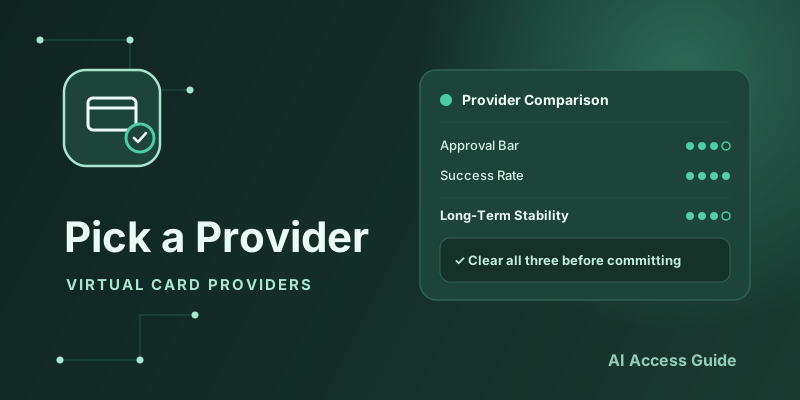
Providers vary widely in how strict their approval process is: some approve instantly with just an email and phone number, others require ID verification, facial recognition, or even proof of funds. Looser approval often correlates with a higher chance of getting flagged by platform risk systems later; a provider with reasonable, transparent requirements tends to hold up better over time.
3. Success rate: AVS/3DS pass rate is the real metric
Our Virtual Card Declined? Troubleshooting Guide covers how AVS address checks and 3DS verification are the two most common blockers for virtual card payments. When evaluating a provider, don't trust the "high success rate" on their landing page — look at independent reviews or recent community feedback, especially for the specific platforms you're targeting, like ChatGPT or Claude.
4. Long-term stability: will the provider still be around
Virtual card providers are fintech products at their core, carrying licensing, compliance, and custody risk. Before committing, check how long the provider has operated, whether it has a stable team and public contact info — avoid the kind that's cheap to sign up for and just as quick to disappear, taking your balance with it.
5. Fee structure: add up issuance, top-up, and maintenance fees
A provider advertising "free card issuance" may quietly make it back on top-up fees, currency conversion, or inactivity charges. List out every fee category before committing, and run the numbers against your actual monthly subscription spend — not just whether the issuance fee is zero.
6. Support response time: can you actually reach someone
When a payment gets declined, an account gets flagged, or funds get frozen, how fast a provider's support responds directly determines how quickly it gets resolved. Before opening an account, send a test inquiry or support ticket and see how fast — and how well — they respond; it's a simple, low-cost way to gauge reliability.
7. How to test a new provider cheaply
Don't load a large balance into a new provider right away. Using the virtual card provider RDVCC as an example, start with a small test top-up, confirm the success rate and settlement speed meet your expectations, then gradually migrate your regular subscriptions over. During the test phase, watch how long issuance takes, how fast support responds, and whether entering card details at checkout goes smoothly without unexpected warnings.
8. If you already picked wrong: how to migrate
If your current provider keeps causing problems, don't rush to close the old account — first confirm whether the remaining balance can be withdrawn or refunded, then complete a test card with the new provider, and finally switch each subscription's payment method over one at a time, so an old card doesn't suddenly stop working mid-cycle. Keep the old card active for at least one billing cycle during migration, and only close it once the new one has confirmed a successful charge.
9. Summary
With virtual cards, the provider matters more than the card itself. Approval requirements, success rate, long-term stability, fee structure, and support responsiveness — taken together, these five signals are a far better guide than comparing issuance fees or marketing copy. Once you've picked one, pair it with our Fund Reserve guide to keep a reasonable emergency buffer in the account.